


Review Copy Sponsed By AV Entertainment
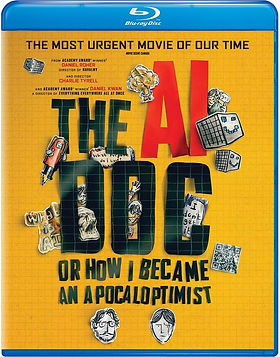
THE AI DOC: OR HOW I BECAME AN APOCALOPTIMIST
Universal Pictures l 2026 l 103 min l Not Rated l May 19, 2026 l Blu-ray

.png)
BUY YOUR COPY TODAY
Cast: Daniel Roher
Director(s): Daniel Roher, Charlie Tyrell
Producer(s): Diane Becker, Shane Boris, Daniel Kwan, Ted Tremper, Jonathan Wang
Writer(s): Daniel Roher
From the Academy Award -winning filmmakers behind Everything Everywhere All at Once and Navalny; a father-to-be tries to figure out what is happening with all this AI insanity. The AI Doc: Or How I Became an Apocaloptimist is a hand-made, eye-opening documentary about the most powerful technology humanity has ever created...and what's at stake if we get it wrong.
disc specs
Video:
Codec: MPEG-4 AVC
Resolution: 1080p
Original aspect ratio: 1.85:1
Audio:
English Dolby TrueHD 5.1
English DVS Dolby Digital 2.0
Special Features:
No Bonus Features
film review
Review By Darren Zakus / May 23, 2026
Rating 4 out of 5
The AI Doc: Or How I Became an Apocaloptimist is an excellent documentary exploring all aspects of artificial intelligence in our world today, that framed through Daniel Roher’s inquisitive search for answers and interviews with both creators of artificial intelligence and advocates for stronger regulation and control of it, results in an expertly crafted documentary that is timely, terrifying and, above all else, important.
With his first of two films released this year, Daniel Roher returns to the world of documentarian filmmaking and takes on one of the most talked about technological advancements in today’s world: artificial intelligence. Always believed to be part of the science fiction genre, artificial intelligence has taken leaps and bounds in recent years and has become a major component of day-to-day life. Anyone who has seen any of Roher’s previous documentaries know that he is a talented documentarian and that the approach he will take to artificial intelligence will not be generic in any shape of form, and that is exactly what he does in The AI Doc: Or How I Became an Apocaloptimist. Covering all elements of artificial intelligence including its dangers, possibilities for advancement of human society, political and environmental concerns, Roher and his co-director Charlie Tyrell interview key players in the field to develop an insightful documentary that is not only informative, but provides the information and context to ensure that every citizen of the planet knows the part they need to play in ensuring that humanity is not eclipsed by artificial intelligence.
The documentary itself is structured into different segments, with Roher exploring a different aspect of the technology in each chapter, told through interviews, archival footage and animation. After providing a general definition of what artificial intelligence is, Roher begins exploring both the benefits and dangers of artificial intelligence in the film’s first two chapters. While there is an undeniable doom and gloom to the chapter devoted to the dangers of artificial intelligence, especially with the dawn of artificial general intelligence only a matter of years away and its ability to make humans obsolete with its ability to exceed human cognitive abilities, there is a cautionary element to the documentary that harkens to nightmares of artificial intelligence taking over the world and the end of human kind. It’s immediately contrasted with the CEO and chief developers of the leading artificial intelligence companies in the next chapter praising the technology and how it will help mankind do things never possible before and enrich our lives as a whole.
The truth lies somewhere in between these two views, and what makes this documentary so important is that it moves past these two camps of thought and explores artificial intelligence in the landscape of today’s world dealing with environmental, commercial, safety and geopolitical concerns surrounding it. Roher and Tyrell distill the doom and gloom surrounding artificial intelligence and focus on its larger context in our world, giving the documentary a more realistic and pressing concern for the average person to take note of in the development of artificial intelligence, using past historical events of technological advancement to help draw parallels to the situation that faces mankind with artificial intelligence and develop the central thesis of the documentary.
Though, what makes The AI Doc: Or How I Became an Apocaloptimist so effective and crucial viewing in today’s world is Roher’s approach to the subject matter. Beginning working on the documentary back in 2019 and conducting interviews over the coming years, coinciding with Roher and his wife expecting their first child, the entire documentary is framed through the lens of what world are we bringing the next generation into: is it a world where they will thrive in with artificial intelligence as an important component of life, or will it be one where this next generation does not live to graduate high school if the worst should happen? It’s a deeply human approach to the subject matter, full of panic, laughter and compassion, and creates a tone to the entire documentary that any audience can personally relate to the subject matter. This perspective and structuring each segment of the documentary by a different central question allows Roher to naturally find the thesis of his documentary, as he himself did not know where his interviews were going to take him when he started out the filmmaking process. Combined with the film’s editing, stitching together multiple different interviews with individuals both for and against the mass adoption of artificial intelligence and grouping them in quick succession to hammer home common themes while letting the more interesting discussions play out in a longer clip, and the smart use of archival footage, the documentary is able to achieve a truly unbiased opinion on artificial intelligence that goes far beyond the basic and uninteresting position that artificial intelligence is either simply evil or good.
With this framing, and point blank asking the subjects he is interviewing whether they are concerned about bringing children into this world, Daniel Roher finds something more important to say than just going through the pros and cons of artificial intelligence, and something that will affect viewers. As Daniel Roher details in his documentary, this is not the first time that mankind has faced significant technological advancement, nor will it be the last time. From the industrial revolution to the creation of the nuclear bomb in World War II, mankind has always leapt forward in its technological capabilities, and despite the threat these advancements posed, society has banded together to demand regulation of such technologies to ensure safety, and this is exactly what Daniel Roher is urging us to do with artificial intelligence. Carefully laying out his point of view on what human kind needs to demand with the advancements in artificial intelligence over the past years to ensure our survival as a species, through an exploration of all views and aspects of the technology that need to be understood to have a well informed opinion on it, Daniel Roher ensures that not only does The AI Doc: Or How I Became an Apocaloptimist speak to audiences on a personal level to ensure they fully understand artificial intelligence and how it will change our way of life, but is the most urgent film of our time that calls on viewers to ensure that they call for accountability and safety measures in the development of artificial intelligence technologies to ensure the survival of the human race.
disc review
Video: 4.5/5
Audio: 3.5/5
Bonus Features: 0/5
Shot digitally using a Sony FX6 camera, the 1080p presentation of Roher’s documentary looks excellent to say the least. There is a crisp clarity with great colour range in all of the interview sequences, making the image pop on screen more so than some current 4K UHD Blu-Ray releases and shows the great artistry in the film’s use of models and drawing that highlights artistic worth and contrasts to the looming threat of artificial intelligence. The archival footage presents itself nicely, retaining a healthy film grain from the older footage to equally as sharp looking digital footage that matches the level of detail in the documentary’s interviews. All in all, it's a stellar looking presentation of Roher’s ever important documentary.
Sound is not at the forefront of this documentary, with the film largely being a series of interviews with Roher and various experts and creators within the field of artificial intelligence, but the Dolby TrueHD 5.1 audio mix does the trick. Balancing the audio from the various video clips shown in the documentary, Marius de Vries’s musical and the dialogue of the interviews themselves, it's a strong audio mix that ensures that the interview dialogue is crystal clear throughout and at the forefront of the audio mix, even if it is not a flashy mix that really gives your sound system a good workout.
Being a documentary, there is little that can be offered in terms of bonus features as the entire film is a sequence of interviews about a current issue. Therefore, it is no surprise that this Blu-Ray release of The AI Doc: Or How I Became an Apocaloptimist comes with no bonus features of any sort. Apart from promotional interviews for the film or extended interview sequences with the subjects in the film, there is nothing more that can be added as Roher does a great job laying out his entire thesis and thoughts on the topic of artificial intelligence in the documentary itself.
It may not be the flashiest of physical media releases, but the outstanding picture quality and solid audio mix allows the focus to remain on the subject matter and its exploration, making this Blu-Ray release of The AI Doc: Or How I Became an Apocaloptimist a easy recommendation for fans of the documentary or any first time buyers wanting to learn more about the current state of artificial intelligence.